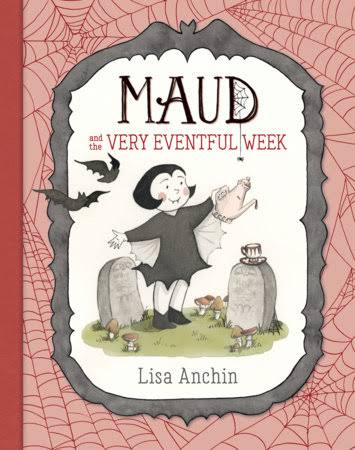
Maud and the Very Eventful Week (Maud the Vampire, book 1) by Lisa Anchin (Candlewick, 64 pages, grades K-3). Each day of Maud’s week is eventful, from buying a runaway teapot at the Night Market to setting up a juice and spider stand that doesn’t get as many customers as she had envisioned. Wednesday’s entry has just two sentences: “On Wednesday, Maud found a tooth! What an exceptional day,” with an illustration of Maud holding up a tusk that’s bigger than she is. Although the stories seem unconnected at first, as the week goes on, the reader will start to recognize things from previous days. On Saturday, Maud has a yard sale featuring the tooth (it turns out to be too big), items from Thursday’s haunted dollhouse, and the spiders and juice again. This time, she makes a lot of money, and on Sunday, she decides to try buying another teapot.
This early reader has a perfect blend of cozy and spooky; Maud’s life features a lot of everyday items and happenings, but all with a slightly ghastly twist that will make readers chuckle. I’m glad to see this is listed as book 1.
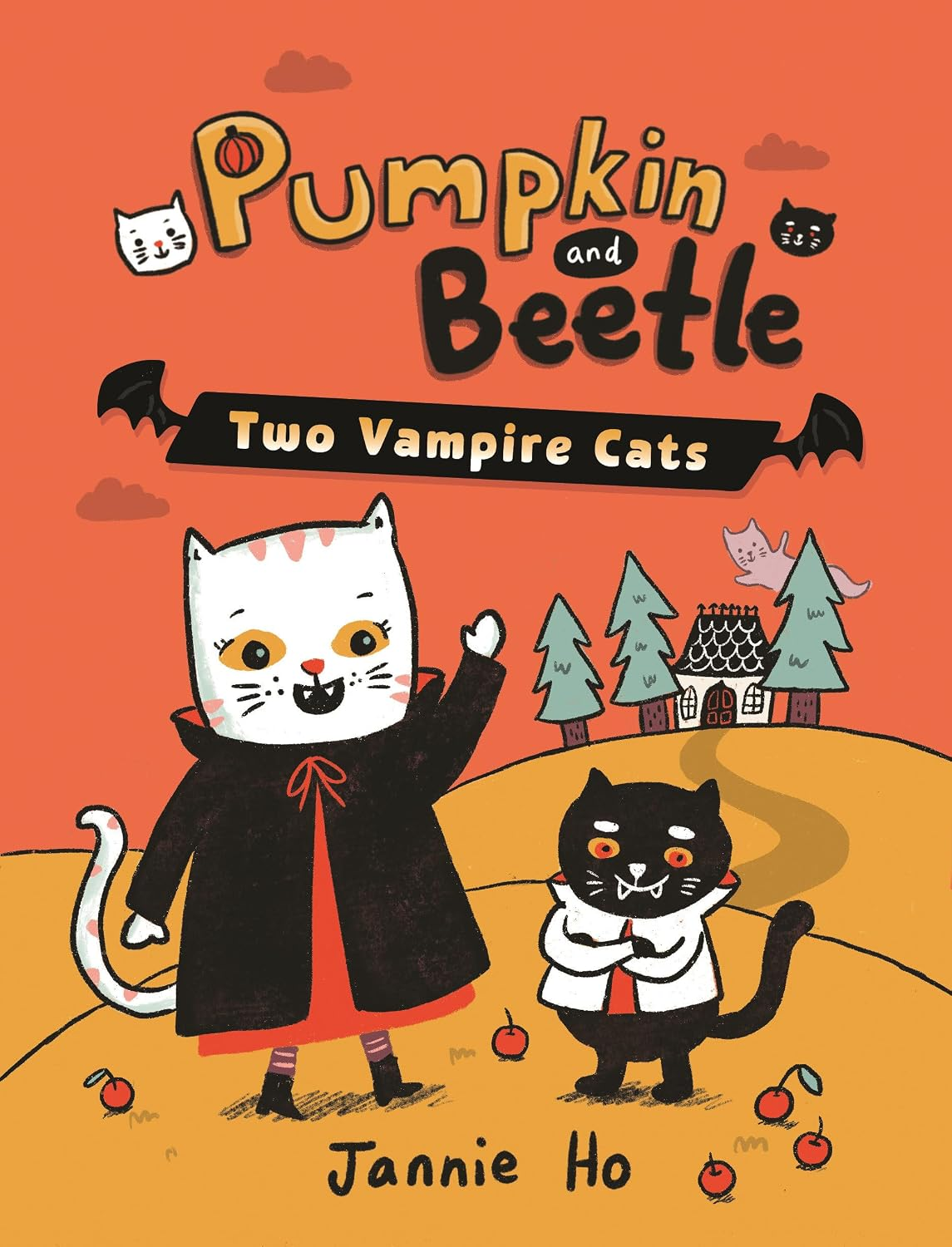
Pumpkin and Beetle: Two Vampire Cats by Jannie Ho (Holiday House, 80 pages, grades K-3). Pumpkin and Boo have fangs, eat only red foods, and are awake at night. They’re vampire cats, of course! When they see the newest volume of their favorite comic book in Mrs. Owl’s shop, they’re soon on a mission to earn enough money to buy it. Sales of crab apples and crab apple muffins prove to be a failure, but when they finally talk things over with Mrs. Owl, she comes up with a plan that makes everyone happy. The last few pages give readers a glimpse of the new comic book featuring the Frightfuls (a Frankenstein monster and a skeleton) and there’s also a recipe for apple muffins that look much better than the ones Pumpkin and Beetle bake.
Fans of Pizza and Taco or Pencil and Eraser will love this new comic book that features lots of Halloween motifs but not a single real scare. I’m a little late in discovering this book, which was published in 2025, but book 2 is coming out in just a few weeks.

 A Kids Book A Day